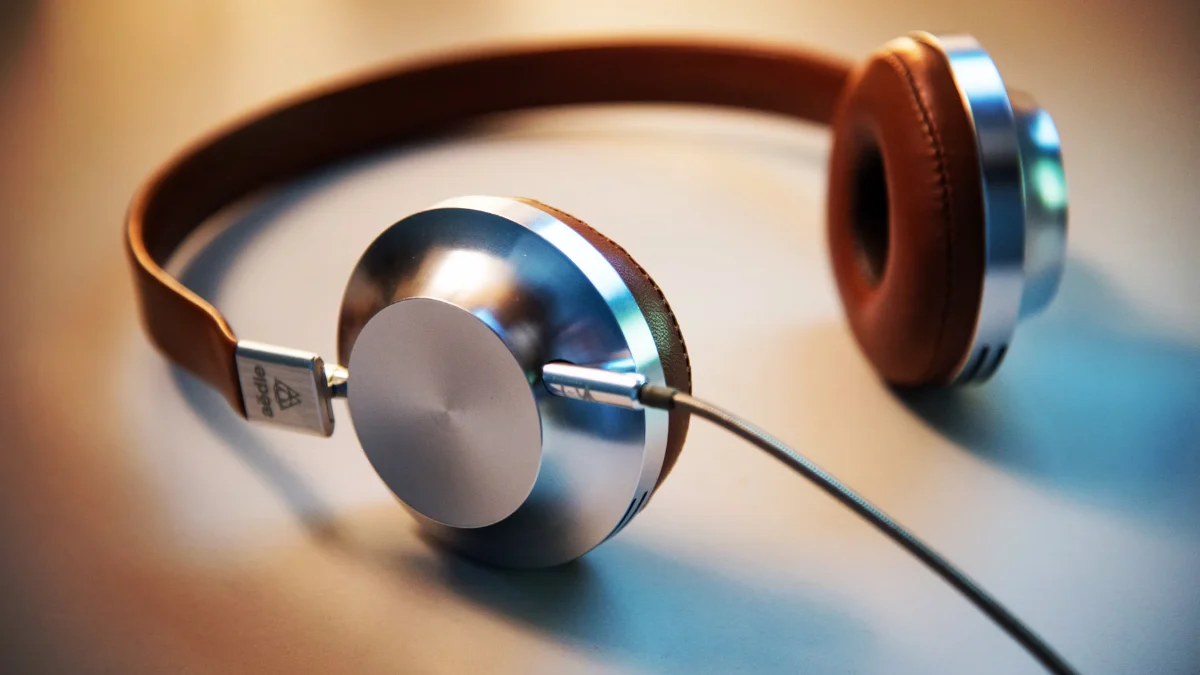
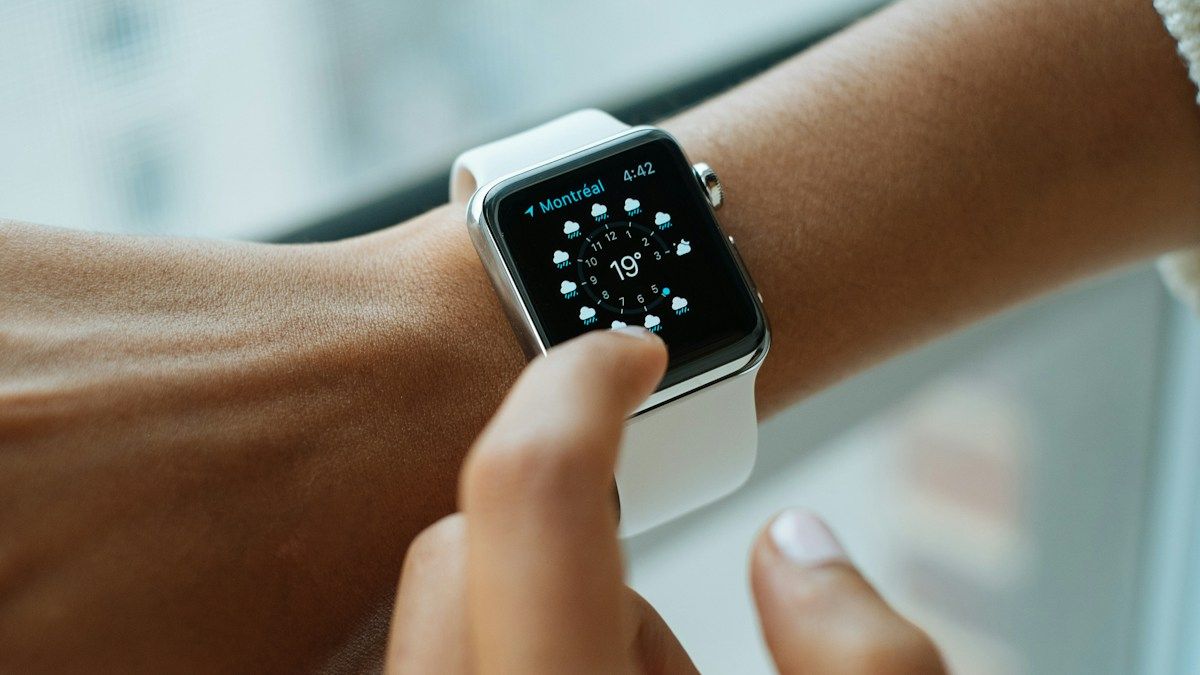
It is the second week of January. The fitness tracker you were given at Christmas is face down on the bedside table, its battery flat since Tuesday, and you feel faintly guilty every time you see it.
You are not lazy. You are, as it turns out, completely normal.
For a decade we were promised clever clothes: jackets that answer your phone, mirrors that dress you, algorithms that know your style better than your best friend. Some of it arrived. Much of it quietly vanished. What stuck has less to do with sensors than with how people actually behave.
This is a guide to the gap between the brochure and the wardrobe, and what that gap says about us.
The jacket that stopped working
The hype: clothing would become an interface. Google’s Project Jacquard, unveiled in 2015, wove touch-sensitive threads into fabric. In 2017 it reached shops inside a Levi’s denim jacket: brush the cuff to skip a song, tap it to hear directions while cycling. Yves Saint Laurent and Samsonite backpacks followed, along with an Adidas football insole.
The reality: Google ended support for Jacquard on 24 April 2023. As 9to5Google reported at the time, the jackets and backpacks lost their companion app and with it their smart features. Owners were left with ordinary clothes and a small electronic tag.
That is the first lesson of smart fashion. A shirt can last twenty years. Software support often lasts a fraction of that, and when the two are sewn together, the shorter lifespan wins.
Why the tracker ends up in a drawer
The hype: wear the device, collect the data, change your life.
The reality: people stop wearing them, and fast. Industry surveys have pointed this way for years. In a US survey run in 2013 by the consultancy Endeavour Partners, about a third of activity tracker owners had stopped using theirs within six months. In 2016 Gartner surveyed 9,592 people online in the US, UK and Australia and reported abandonment rates of 29% for smartwatches and 30% for fitness trackers.
The most revealing work, though, is smaller and closer to the skin. In a study presented at the ACM UbiComp conference in 2015, Amanda Lazar and colleagues gave 17 people up to $1,000 each to buy smart devices that would help with a personal goal. Then they watched what happened.
What the study did
- Who: 17 staff at one technology company, mostly men, so not a typical sample.
- What: each chose a goal and their own devices, 49 in use between them.
- Result: after about two months, almost 80% of devices bought for the study had been abandoned.
At the exit interviews, only 10 of the 49 devices (20%) were still used at least four days a week. Another 5 had been demoted to something dumb, like an alarm clock. Eleven were sitting idle while their owners insisted they would start again soon, and 22 (45%) were finished for good.
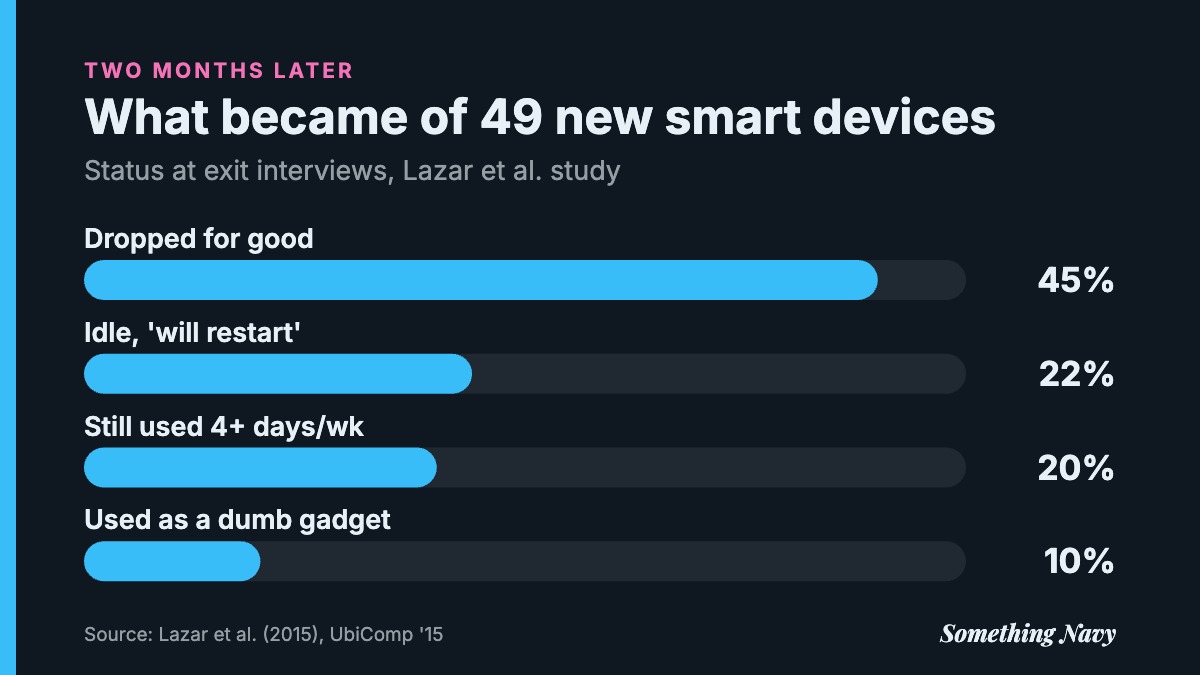
Almost none of the reasons were technical. People felt the devices were meant for someone else, for “health freaks” or extreme athletes. The data told them what they already knew. Charging and calibrating became chores. And a single missed day, or a holiday, often ended the habit entirely, sometimes with relief.
New routines are fragile in their first weeks, as research on how long habits take to form shows. A gadget that needs daily charging asks you to build two habits at once.
The devices that survived were the ones that asked for almost nothing.
Smart scales, which you simply step on, were all still in use. Only one of 13 smartwatches was still worn. The best wearable is the one you forget you are wearing.
The returns pile nobody talks about
Fashion’s biggest technology problem is not on your body. It is in the brown bag by your front door.
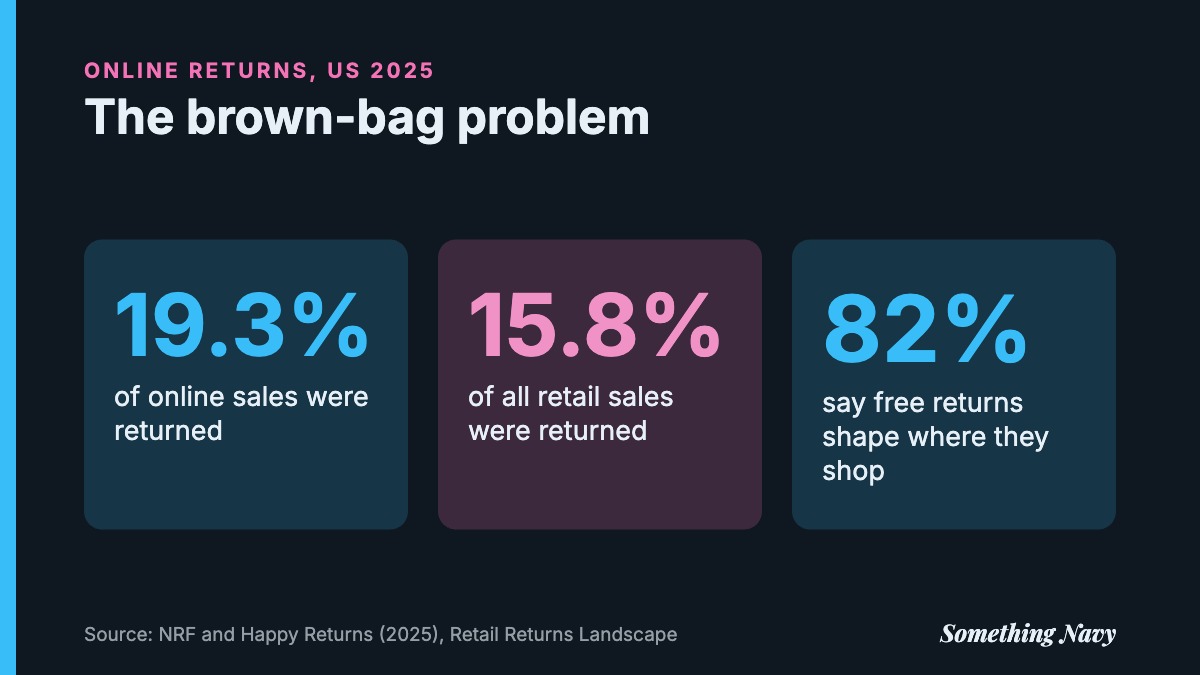
According to the National Retail Federation and Happy Returns, US retailers expected $849.9 billion of merchandise to be returned in 2025, or 15.8% of annual sales. Online, the rate was higher still: 19.3% of sales, close to one in five purchases. The consumer survey behind the report covered 2,006 shoppers who had returned at least one online purchase in the previous year.
And 82% said free returns were a major factor in deciding where to buy, up from 76% the year before.
Psychologically, this makes sense. A free return makes an order reversible, and reversible decisions feel safe. So people order the same jeans in two sizes, a habit called bracketing, and send one back. Close to two-thirds of shoppers in the NRF survey admitted at least one costly returns behaviour, such as bracketing or wearing an item before sending it back.
Free returns did not fix online shopping’s uncertainty. They priced it in.
Virtual try-on: better than the jokes suggest
The hype: a digital mirror would end the fitting-room queue and the returns pile together.
The reality: it helps, quietly, and mostly where shoppers feel least sure.
The strongest evidence comes from randomised field experiments with real customers. Santiago Gallino of Dartmouth’s Tuck School and Antonio Moreno of Northwestern’s Kellogg School tested a virtual fitting tool for womenswear, made by the company Metail, that let shoppers build a model of their own body from their measurements. Published in 2018, the work found that offering this fit information raised conversion and order value. It also cut returns and reduced the habit of ordering several sizes to try at home.
The effects were larger for pricier items and for products sold in many sizes. In other words, the tool earned its keep exactly where buying blind felt riskiest.
Augmented reality shows a similar pattern. Yong Chin Tan, Sandeep Chandukala and Srinivas Reddy, writing in the Journal of Marketing in 2022, analysed data from an international cosmetics retailer whose app let customers try products on their own faces. AR use was linked to higher sales, but mainly for less popular brands, more expensive products and customers new to the category. For a bestseller you already know, seeing it on your face adds little.
So virtual try-on is not magic. It is a tool for reducing doubt, and it works in proportion to how much doubt there was.
AI stylists and the paradox of too many trousers
The hype: artificial intelligence will learn your taste and show you only what you love.
The reality: the most established AI styling business still leans heavily on people. Stitch Fix, the US company that posts curated boxes of clothes, says in its 2025 annual report that it pairs algorithms with human stylists, about 1,710 of them, all part-time. The algorithms suggest; the humans judge. At that point it had roughly 2.3 million active client accounts, a number it said had fallen in each of the past three years.
The pitch for AI styling usually rests on a famous idea: that too much choice paralyses us. In the much-cited jam study of 2000, Sheena Iyengar and Mark Lepper set up a tasting stall in a supermarket. Roughly 30% of people who stopped at a display of six jams bought one, against about 3% at a display of 24.
It is a lovely story, and shakier than it sounds. When Benjamin Scheibehenne, Rainer Greifeneder and Peter Todd pooled 50 experiments covering 5,036 participants in 2010, the average choice overload effect was essentially zero, although results varied widely from study to study. Sometimes more options put people off. Sometimes they helped.
What seems to tire us is less the number of options than the effort of comparing them, which is closer to what we know about decision fatigue. A good recommendation engine reduces that effort. A bad one simply buries you in 400 “picks for you” instead of 4,000 search results.
An AI stylist is useful exactly when it makes the choice smaller, not when it makes the shop bigger.
The scorecard so far
| Promise | What actually happened | Verdict |
|---|---|---|
| Clothes as touch controls | Google’s Jacquard jacket lost its smart features when support ended in April 2023 | Mostly hype |
| Trackers that change your life | Roughly 3 in 10 owners abandon them; in one study 45% of devices were dropped for good within two months | Works for some |
| Virtual fitting rooms | Field experiments show higher sales and fewer returns, especially for pricier items | Real, modest gains |
| AR try-on | Lifts sales mainly for unfamiliar brands, pricier products and new shoppers | Real, where doubt is high |
| AI stylists | The biggest player still uses about 1,710 human stylists alongside its algorithms | Human plus machine |
| Less choice, more sales | Pooled across 50 experiments, the average effect is close to zero | Depends on context |
Your body, their data
The hype: the more your clothes know about you, the better they serve you.
The reality: data about where you move and how your body behaves can travel much further than you intend.
In January 2018 Nathan Ruser, a Sydney-based analyst, noticed that the fitness app Strava’s public global heat map, built from more than a billion uploaded activities, showed the outlines of US military bases in Iraq, Syria and Afghanistan. Soldiers jogging laps with their trackers had, collectively, drawn the map. As SBS News reported, he described the bases as “clearly identifiable and mappable”.
No single runner gave anything away. That is the uncomfortable part of smart clothing: the decision to share feels individual, but the consequences are often collective.
What it means for the clothes you buy next
None of this means smart fashion is a con. The useful parts are just less glamorous than the launch videos.
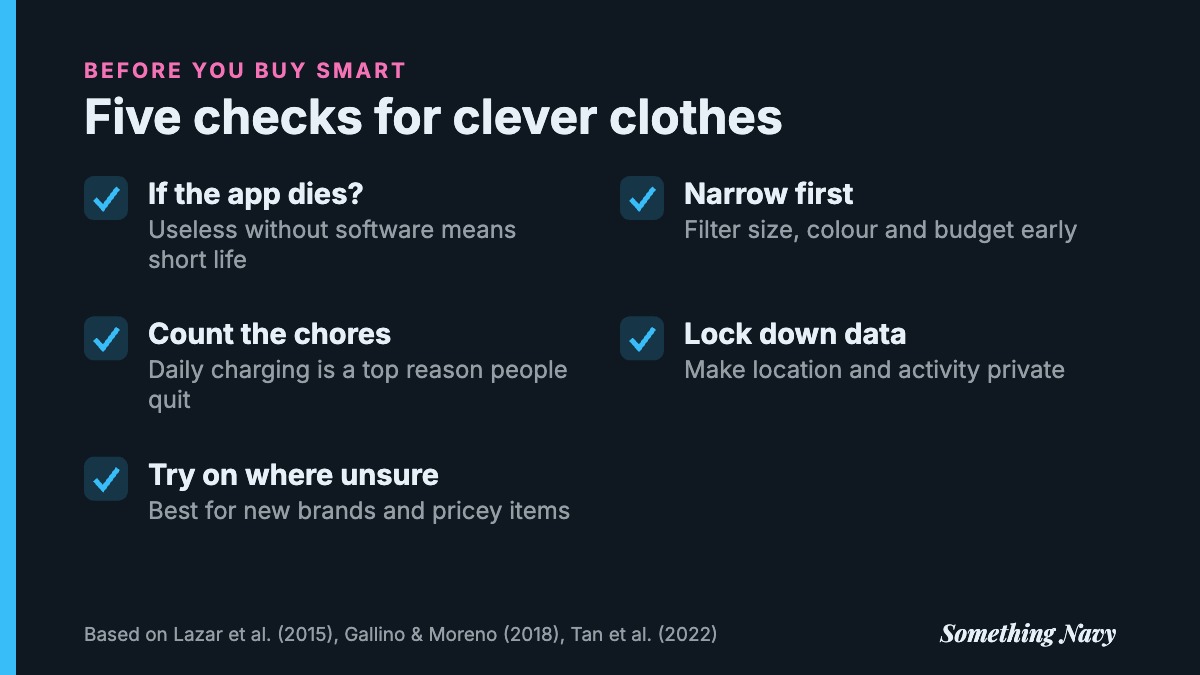
- Ask what happens when the app dies. If the garment is useless without software, treat it as a short-lived gadget.
- Count the chores. Charging and logging drove people to quit in the Lazar study. Pick whatever asks least of you.
- Use try-on tools where you are unsure. Unfamiliar brands, expensive items and tricky sizing, not repeat buys.
- Narrow before you browse. Set size, colour and budget filters first.
- Check sharing settings on day one. Make location and activity data private by default.
The quiet future of smart fashion
The pattern across all of this is consistent. Technology in fashion succeeds when it lowers effort and doubt, and fails when it adds chores, demands a new identity or outlives its own software.
The winners will not look futuristic. They will look like a size recommendation you trust, a try-on that saves one return, a ring you never take off because you never have to.
The cleverest clothes, in the end, may be the ones that ask the least of you.
Frequently asked questions
Only if the item still works without its app, or you accept it as a short-lived gadget. Google’s Jacquard jackets lost their smart features in 2023.
Industry surveys put abandonment at roughly 30%. One small 2015 study found almost 80% of new smart devices abandoned within two months.
Field experiments with a virtual fitting tool found fewer returns and less ordering of multiple sizes, especially for pricier items.
Location and activity data can reveal more than expected when pooled across users, so keep profiles private by default.
Sources
- Lazar, A., Koehler, C., Tanenbaum, J., & Nguyen, D. H. (2015). Why we use and abandon smart devices. Proceedings of the 2015 ACM International Joint Conference on Pervasive and Ubiquitous Computing (UbiComp ’15), 635–646. DOI
- National Retail Federation & Happy Returns. (2025, 15 October). Consumers expected to return nearly $850 billion in merchandise in 2025 [Press release]. Link
- Gallino, S., & Moreno, A. (2018). The value of fit information in online retail: Evidence from a randomized field experiment. Manufacturing & Service Operations Management, 20(4), 767–787. DOI
- Tan, Y. C., Chandukala, S. R., & Reddy, S. K. (2022). Augmented reality in retail and its impact on sales. Journal of Marketing, 86(1), 48–66. DOI
- Scheibehenne, B., Greifeneder, R., & Todd, P. M. (2010). Can there ever be too many options? A meta-analytic review of choice overload. Journal of Consumer Research, 37(3), 409–425. DOI
- Stitch Fix, Inc. (2025). Annual report on Form 10-K for the fiscal year ended August 2, 2025. US Securities and Exchange Commission. Link
- Bradshaw, K. (2023, 28 March). Google shutting down the Jacquard smart fabric app in April. 9to5Google. Link
Updated 17 October 2026: we rewrote this article with new research, figures and sources. Cover photo: Luke Chesser on Unsplash. Charts and graphics: Something Navy.
How we reported this. We went back to the original research for this story, 7 sources in all, listed above, and checked every figure against them. If you think we have got something wrong, tell us and we will look at it. Read more about how we work.