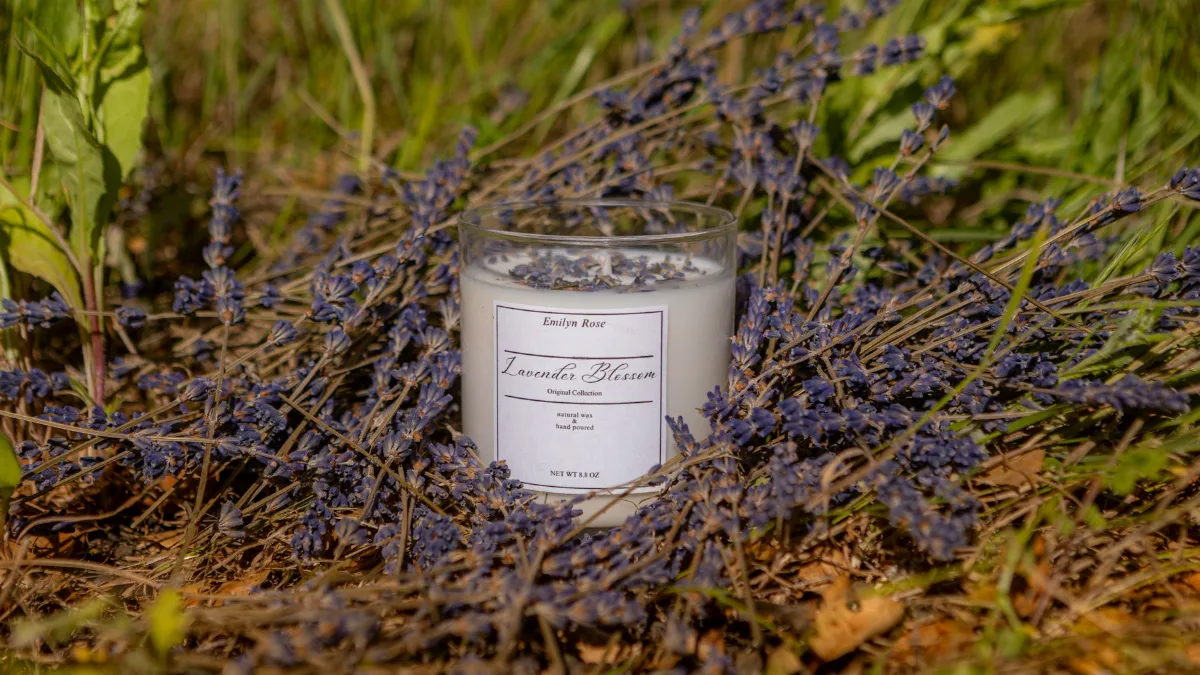
It is gone nine by the time you get in. Coat on the hook, bag on the floor, phone face down for the first time since lunch. You find the lavender candle someone gave you at Christmas, strike a match and watch the flame settle.
Within a minute the room smells of it, soft and faintly medicinal. You sink into the sofa and wait to feel calmer. You do, a little. But you are also sitting down, and nobody is emailing you.
So which is it? Is the lavender acting on your nervous system, or is it simply your signal that the day is over?
The short answer is that lavender’s reputation runs ahead of its evidence, though not by as much as sceptics might hope. The more interesting answer is that what you believe about a smell can matter as much as the smell itself.
What the research says about lavender for anxiety
The biggest attempt to pull the evidence together is a 2019 systematic review and meta-analysis in Phytomedicine by Davide Donelli, Michele Antonelli and colleagues at the University of Parma and Careggi University Hospital in Florence. They gathered 65 randomised controlled trials involving 7,993 people, plus 25 non-randomised studies with another 1,200, and pooled the numbers from 37 of the trials.
For lavender that is simply breathed in, the pooled result looked respectable. Across 1,682 participants, inhaled lavender was linked to lower scores on validated anxiety questionnaires, with an effect size (Hedges’ g of 0.73) that statisticians would usually call moderate to large. Systolic blood pressure, however, did not change significantly.
Then come the caveats. The authors judged that most trials carried a high risk of bias, that average quality was low and that designs varied wildly. Lavender massage also seemed to ease anxiety, but those studies cannot separate the lavender from the massage.
There is also a problem baked into the field: you cannot hide a smell. Lavender is easy to recognise, so participants usually know which group they are in, and if you know lavender is meant to calm you, your questionnaire answers may follow.
The newest evidence, from 2025
Recent work points the same way, with the same health warnings. In March 2025, a team from the Naval Medical University in Shanghai published a meta-analysis in Frontiers in Psychiatry on inhaled aromatherapy for people whose insomnia sits alongside another illness, such as cancer or heart disease. They found 27 randomised trials covering 2,072 patients, and 21 of those trials used lavender, alone or in a blend.
Aromatherapy was linked to better sleep and lower anxiety and depression scores. But the studies varied enormously, only two trials reported any blinding, and the authors described the overall certainty of the evidence as merely average and urged caution.
Can lavender help you sleep better?
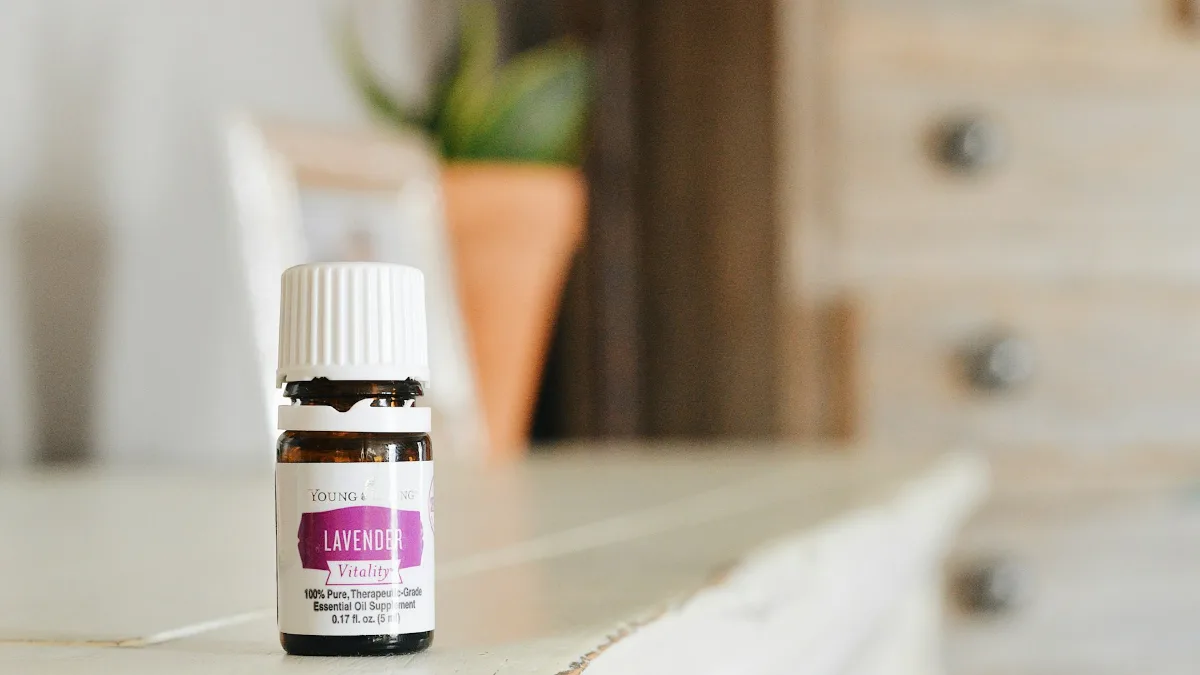
Sleep is where lavender’s folk reputation is strongest. In 2014 Angela Smith Lillehei and L. L. Halcón of the University of Minnesota School of Nursing reviewed every quantitative human study of inhaled essential oils and sleep they could find from 1990 to 2012. That turned out to be just 15 studies, 11 of them randomised trials, with 409 participants between them. Lavender was the oil tested most often.
Most results leaned positive, and none of the studies reported side effects. Yet the studies were tiny, from 4 to 67 people each, in settings that ranged from people’s homes to sleep laboratories and hospital wards. Lillehei and Halcón’s conclusion was careful: inhaled oils “may be considered” for people with mild sleep problems, pending bigger, better trials.
In 2015 Lillehei and colleagues ran one of those trials themselves, in the Journal of Alternative and Complementary Medicine. They recruited 79 college students with self-reported sleep problems. Everyone followed basic sleep hygiene advice for five nights and wore a small inhalation patch on the chest. Half the patches held lavender oil; the other half were blank.
The lavender group reported better sleep quality afterwards and two weeks later, and woke feeling more refreshed. The sleep hygiene group improved too, just less. But Fitbit trackers and sleep diaries showed no difference in how long either group slept. Lavender, in other words, may change how your night feels more than how long it lasts. If screens are your bigger problem, see our look at blue light and sleep.
Expectations and the placebo problem in aromatherapy
If you suspect some of this is in the mind, a neat 2004 experiment in Psychological Reports by C. E. Campenni, E. J. Crawley and M. E. Meier backs you up. They exposed 90 undergraduate women to lavender, neroli or a placebo, and told some the scent would be relaxing, others that it would be stimulating, and the rest nothing.
The suggestion steered the body. Told to expect relaxation, women’s heart rate and skin conductance (a sweat-based measure of arousal) fell. Told to expect stimulation, the same measures rose. The authors concluded that expectations play a significant role in how smells shift mood.
A carefully controlled study from Ohio State University complicates lavender’s case further. Janice Kiecolt-Glaser and colleagues reported in Psychoneuroendocrinology in 2008 that they had exposed 56 healthy adults to lavender, lemon and plain water across three visits, some told what to expect and some not. Lemon reliably lifted positive mood. Lavender did not, compared with water. Neither scent reliably changed heart rate, blood pressure or pain ratings, and effects on immune and hormone measures were few and scattered.
None of this makes your candle useless. A lower heart rate is a lower heart rate, whatever caused it. But much of the comfort may come from ritual and association rather than chemistry. That fits with what psychologists know about why some rooms feel cosy, where warmth, softness and familiarity work together rather than any single ingredient.


Silexan: the lavender capsule with stronger evidence
The firmest lavender evidence is not about aromatherapy at all. Silexan is a standardised lavender oil sold as an 80 mg capsule, taken by mouth. In the Donelli review, oral lavender came out as effective for anxiety, mostly on the strength of Silexan trials of at least six weeks.
A 2019 meta-analysis in the European Archives of Psychiatry and Clinical Neuroscience, led by H. J. Möller of Ludwig Maximilian University of Munich, pooled three trials involving 709 adults with anxiety that did not quite meet the threshold for a formal disorder. After ten weeks, Silexan beat placebo on the main anxiety scale by just under four points, an effect size of 0.45, which is moderate. Sleep improved too, which the authors put down to the easing of anxiety rather than sedation, and side effects were similar to placebo.
Two cautions. First, the manufacturer, Dr. Willmar Schwabe, funded the analysis, sponsored the trials, supplied the data and employed two of the authors. Second, the researchers themselves warned: “The results cannot be generalised to other lavender oil products.” A capsule tells you nothing about a candle or a pillow spray, and anyone considering it should talk to a doctor or pharmacist first.
Scented candles, wax melts and indoor air
Back to that candle. Whatever it does for your mood, it is doing something to the air.
In a 2013 study in Environmental Science and Pollution Research, a team led by A. Manoukian burned incense sticks and a scented candle in a ventilated test room in France. Particle counts rose sharply during burning, and volatile organic compounds peaked just after burning stopped. Levels fell back towards background within a few hours, and the authors judged the effect on air quality likely to be low in a well-ventilated room.
Flameless options are not automatically cleaner. In 2025, a team including Nusrat Jung and Brandon Boor reported in Environmental Science & Technology Letters on 15 commercial wax melts warmed in a full-scale test house. The scented melts released terpenes, fragrance compounds that reacted with ozone in the air to form nanoparticles at levels comparable to those reported for burning candles. An unscented melt produced none, pointing the finger at the fragrance itself. The authors said more toxicology research is needed to know what this means for health.
| Claim | What the evidence shows | Verdict |
|---|---|---|
| Smelling lavender reduces anxiety | Pooled trials show lower anxiety scores, but most studies are low quality and hard to blind | Promising, not proven |
| Lavender helps you sleep longer | A 79-person trial found better sleep quality but no change in sleep quantity | Unsupported for duration |
| Lavender improves how sleep feels | Small trials and a 2025 review lean positive, with only average certainty | Plausible, modest |
| Expectations shape the effect | Suggestion alone shifted heart rate and skin conductance in 90 women | Well supported |
| Lavender capsules ease anxiety | Three manufacturer-funded trials show a moderate benefit for one extract | Stronger, product-specific |
| Scented candles are harmless | Burning raises indoor particles; scented wax melts form nanoparticles | Ventilate and use in moderation |
How to use lavender and home fragrance sensibly
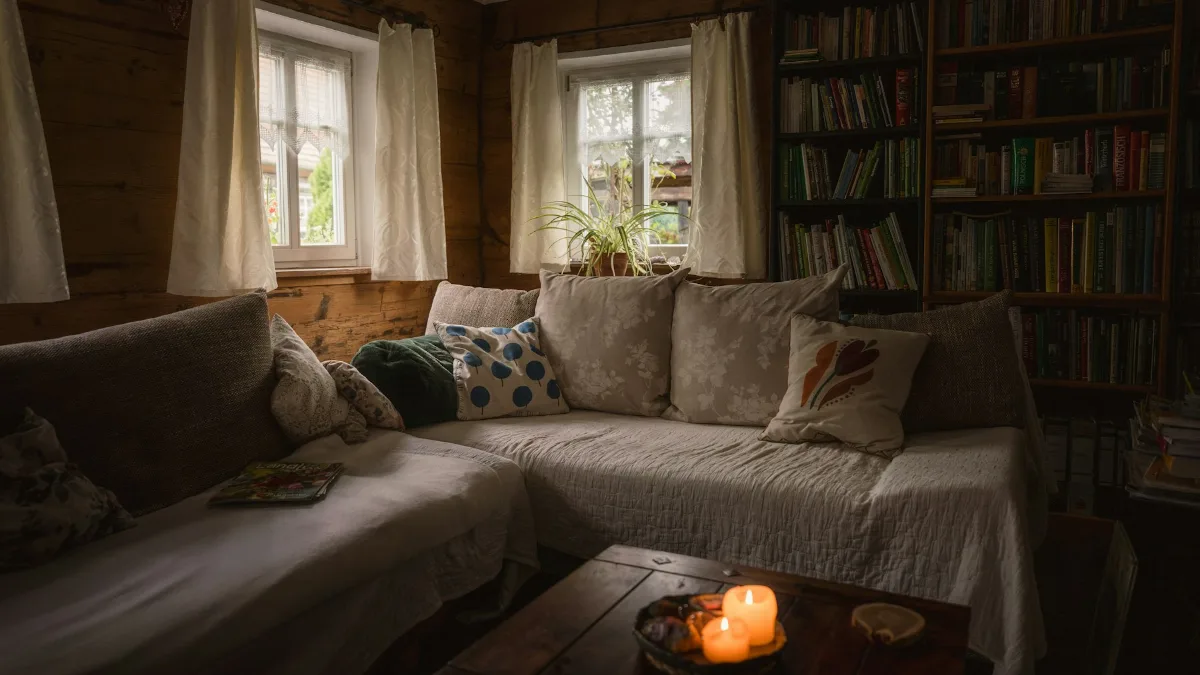
If lavender makes your evenings feel calmer, nothing here says stop. Just keep expectations modest and treat the scent as one cue among many, alongside dimmer lights and a regular bedtime.
Pets deserve more thought. Kia Benson, a veterinarian in clinical toxicology writing for Pet Poison Helpline, explains that cats lack a liver enzyme they need to break down and clear essential oils, and their grooming habits increase exposure. Dogs do not share that deficiency but can still be harmed. Reed diffusers and candles do not release oil droplets, so the main risk is breathing irritation, unless a bottle tips over. Ultrasonic and nebulising diffusers are riskier, because their micro-droplets can settle on fur.
Using scent safely at home
- Ventilate: open a window while burning candles and for a while afterwards.
- Never leave a lit candle unattended, and keep it away from curtains and pets.
- Place reed diffusers and oil bottles where pets cannot knock them over.
- Avoid active diffusers in rooms where cats spend time, especially cats with asthma.
- Never apply concentrated essential oils to pets or add them to their food.
- If an animal has breathing trouble or seems unwell after exposure, move it to fresh air and call a vet.
- Scent is not a treatment for anxiety or insomnia; if either is affecting daily life, speak to a GP.
Your candle, then, is probably not sedating you. It may be nudging your heart rate down because you expect it to, marking the end of the day. That is not nothing. Just crack a window while it burns.
Frequently asked questions
The evidence is thin. Small trials suggest inhaled lavender may make sleep feel better, but a 79-person trial found no change in how long people slept.
Use caution. Cats lack a liver enzyme needed to clear essential oils, and active diffusers can leave droplets on fur. Ask a vet if unsure.
Burning candles raises indoor particle levels, and a 2025 study found scented wax melts can form nanoparticles too. Researchers say ventilation helps, and the long-term health effects need more study.
Official links and research
- Campenni, C. E., Crawley, E. J., & Meier, M. E. (2004). Role of suggestion in odor-induced mood change. Psychological Reports, 94(3), 1127-1136. DOI
- Chen, H.-B., Zhang, Y.-D., Qin, Y., Jiang, H.-Y., Wang, L.-N., & Gu, W. (2025). Inhalation aromatherapy for the treatment of comorbid insomnia: A systematic review and meta-analysis. Frontiers in Psychiatry, 16, 1485693. DOI
- Donelli, D., Antonelli, M., Bellinazzi, C., Gensini, G. F., & Firenzuoli, F. (2019). Effects of lavender on anxiety: A systematic review and meta-analysis. Phytomedicine, 65, 153099. DOI
- Kiecolt-Glaser, J. K., Graham, J. E., Malarkey, W. B., Porter, K., Lemeshow, S., & Glaser, R. (2008). Olfactory influences on mood and autonomic, endocrine, and immune function. Psychoneuroendocrinology, 33(3), 328-339. DOI
- Lillehei, A. S., & Halcón, L. L. (2014). A systematic review of the effect of inhaled essential oils on sleep. Journal of Alternative and Complementary Medicine, 20(6), 441-451. DOI
- Lillehei, A. S., Halcón, L. L., Savik, K., & Reis, R. (2015). Effect of inhaled lavender and sleep hygiene on self-reported sleep issues: A randomized controlled trial. Journal of Alternative and Complementary Medicine, 21(7), 430-438. DOI
- Manoukian, A., Quivet, E., Temime-Roussel, B., Nicolas, M., Maupetit, F., & Wortham, H. (2013). Emission characteristics of air pollutants from incense and candle burning in indoor atmospheres. Environmental Science and Pollution Research, 20(7), 4659-4670. DOI
- Möller, H.-J., Volz, H.-P., Dienel, A., Schläfke, S., & Kasper, S. (2019). Efficacy of Silexan in subthreshold anxiety: Meta-analysis of randomised, placebo-controlled trials. European Archives of Psychiatry and Clinical Neuroscience, 269(2), 183-193. DOI
- Patra, S. S., Jiang, J., Liu, J., Steiner, G., Jung, N., & Boor, B. E. (2025). Flame-free candles are not pollution-free: Scented wax melts as a significant source of atmospheric nanoparticles. Environmental Science & Technology Letters, 12(2), 175-182. DOI
- Benson, K. (n.d.). Updates on essential oils. Pet Poison Helpline. Link
Cover photo: Mazin Omron on Unsplash. Other photography by Brittany Neale and Ahmet Yüksek on Unsplash.
How we reported this. Every figure was checked against the 10 sources above. Reviewed by Brooke Hilland, Senior Content Editor. Report an error · How we work