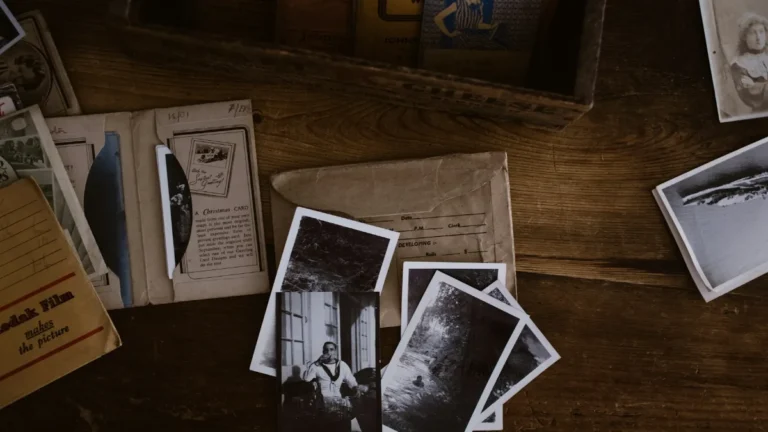
The End of History Illusion: Why You Think You’ve Finished Changing (and Probably Haven’t)
Most of us happily admit we’ve changed since our twenties, then assume the person we are today is the final version. The evidence says otherwise.

How people think, feel and behave, explained through research and real life.
Most of us happily admit we’ve changed since our twenties, then assume the person we are today is the final version. The evidence says otherwise.

Close your eyes and picture an apple. For a few people, nothing appears at all. Ten years after scientists named aphantasia, here is what they have learned.

You can tune out a hundred voices and still catch your own name from across the room. The science of how, and why only some of us do, is stranger than it sounds.

Swapping “I” for your own name in your head sounds like a party trick. A decade of experiments says it helps a little, sometimes, and the details matter.

Your brain sizes up a stranger’s face in about a tenth of a second. The science of first impressions says that verdict is quick, confident and surprisingly shaky.
Bad news grabs the brain faster and holds on longer. A tour of negativity bias, the ratios people quote about it, and the ones that don’t survive scrutiny.
A tickling robot, a brain scanner and a finger-pressing duel show how your brain mutes its own touch, and what that says about everything you feel.

Across 50 later experiments, the average effect of more options was almost zero. Four conditions decide when a long menu really does stop you.
Nearly nine in ten people in one large survey get one weekly. Tunes named by 3,000 people show what makes a melody sticky, and why gum helps.
In 1688 a Basel dissertation called it an illness. Today’s labs find nostalgia eases loneliness and can make a cold room feel warmer.